
Majuli satras: which to visit and what each is known for
Quick answer
- What: satras are Vaishnavite monasteries founded in the tradition of the 15th–16th century saint Srimanta Sankardeva. Majuli is the heart of satra culture.
- Don't miss: Auniati (museum, Paal Naam), Dakhinpat and Garamur (royal satras, Raas), Uttar Kamalabari (Sattriya dance), Samaguri (masks) and Bengenaati (Ahom royal relics).
- How many in a day: three or four is realistic on a day trip from Jorhat; five or six if you stay overnight.
- Getting there: ferry from Nimati Ghat in Jorhat; the road bridge is still under construction.
- Entry: usually free; a small fee may apply at museums. A donation is always welcome.
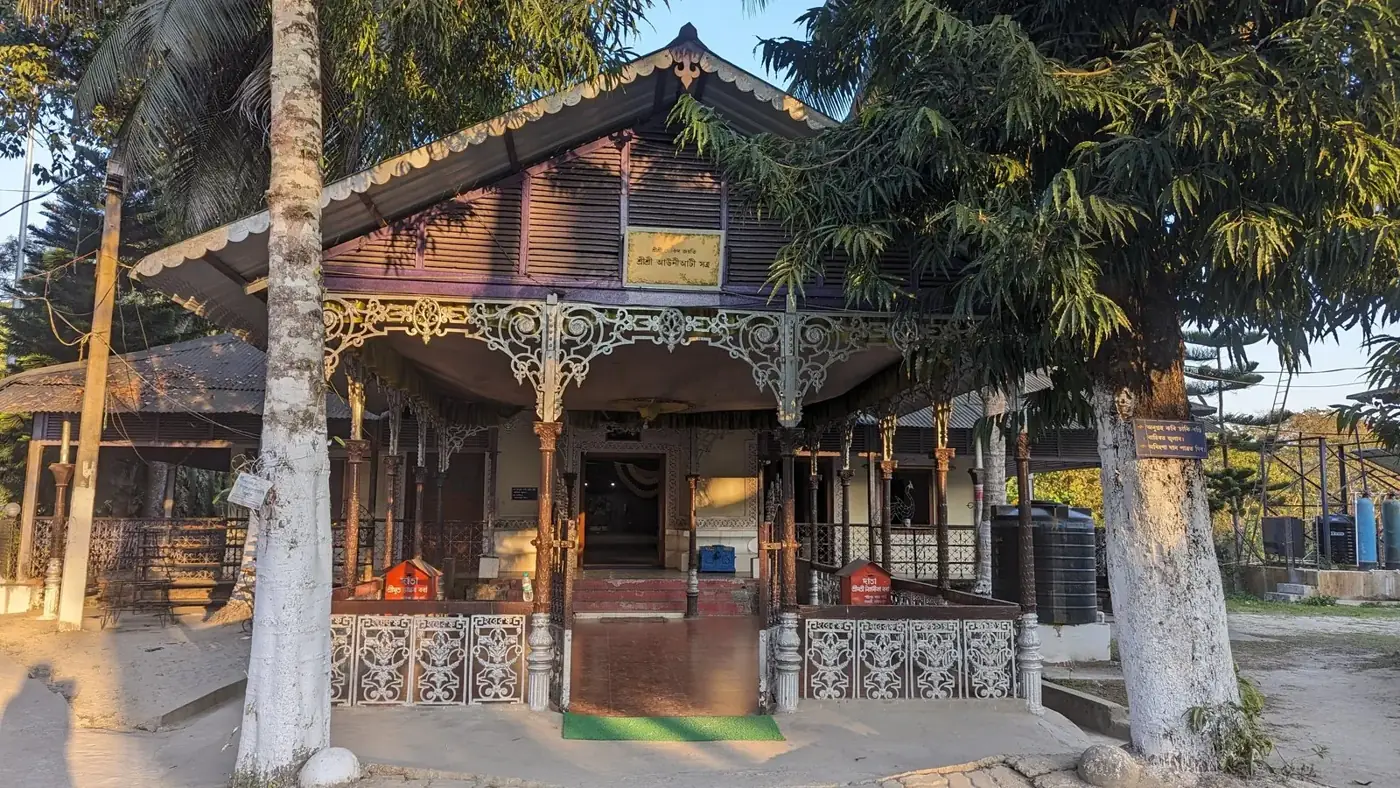
Majuli is often called a river island of monasteries, and the satras are the reason most people cross the Brahmaputra to see it. They are not museums or temples in the usual sense. Each is a living community of monks (*bhakats*), with a prayer hall, living quarters, and centuries of music, dance, drama and craft. Some are grand royal foundations; others are quiet clusters of huts.
A little background
In the 15th and 16th centuries, Srimanta Sankardeva spread a devotional form of Vaishnavism across Assam through song, dance and drama. His followers set up satras as centres of worship and learning, and Majuli became their stronghold. Several were later patronised by the Ahom kings, which is why some hold royal gifts. Floods and erosion have shrunk the island and pushed some satras to the mainland, but dozens are still active on Majuli.
At the centre of every satra is the namghar, the prayer hall, usually facing the *manikut*, the sanctum. Around it are the *hatis*, rows of monks' quarters.
The main satras
- Auniati Satra: founded in 1653 under the Ahom king Jayadhwaj Singha, and one of the most important royal satras. It is known for the Paal Naam devotional singing and for its museum of old utensils, jewellery, ivory and Ahom-era artefacts. Its monks live as celibates.
- Dakhinpat Satra: a royal satra in the south of the island, founded by Banamali Dev, and one of the main venues for the Raas festival in November. It holds old manuscripts and artefacts, and a new satra museum was opened here in February 2026.
- Garamur Satra: founded in 1656, close to Garamur, the island's main town. It is another royal satra, a major Raas centre, and is known for preserving old weapons from the Ahom era.
- Kamalabari and Uttar Kamalabari Satra: the home of Sattriya, Assam's classical dance. Uttar Kamalabari, an offshoot of the original Kamalabari, is where visitors are most likely to see monks practise, or arrange to watch a short performance. Read more in our Sattriya dance post.
- Samaguri Satra: founded in 1663 and famous for mask-making, from small faces to towering Ravanas used in Bhaona drama. You can watch artisans at work and buy masks directly. See Majuli's mask-makers.
- Bengenaati Satra: founded in the 17th century by Muraridev. It keeps relics linked to the Ahom king Swargadeo Gadadhar Singha, including royal robes, a royal seat and a golden umbrella.
Planning your satra day
- On a day trip, take the first ferry, then do Kamalabari, Auniati and Garamur or Dakhinpat, with Samaguri if time allows. Our Majuli day trip or overnight guide has a realistic schedule.
- Morning and evening prayers are the most moving times to visit, when the namghar fills with cymbals, drums and chanting. Overnight guests can catch both.
- Hire a car or auto on the island from Kamalabari Ghat; the satras are spread out, and walking between them isn't practical.
- Raas season (around the November full moon) is spectacular but crowded.
Etiquette
- Take off your shoes before entering the namghar and other halls.
- Dress modestly, with shoulders and knees covered. Keep your voice low.
- Ask before photographing monks, rituals or museum objects. Some areas, including the manikut, are closed to visitors.
- Satras are working monasteries, so timings depend on daily routines. Most are open from morning to late afternoon; confirm locally.
- Entry is usually free. Leave a donation, and buy crafts directly where you can.
For ferry times, car ferries and fares, see how to reach Majuli from Jorhat. Ferry schedules change with the river level, so check the night before.
Where to stay: NOI Homes, central Jorhat
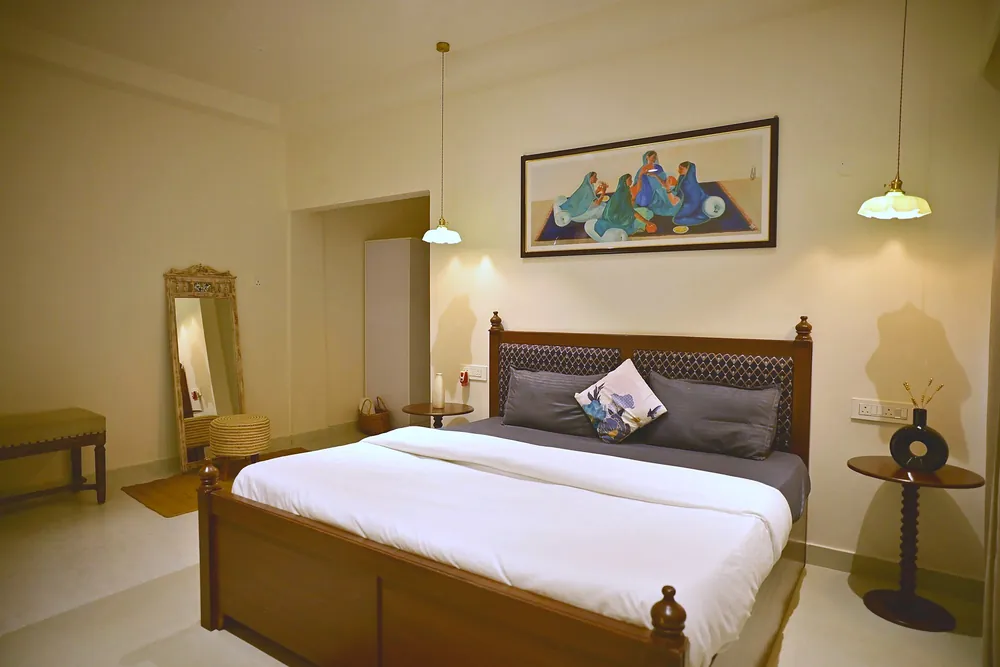
NOI Homes is a boutique homestay on J.B. Road in central Jorhat. There are two 2BHK apartments, each for up to six guests. NOI Homes Elite is always let as the whole apartment, with two bedrooms (Khwaab and Gulmohar). NOI Homes Privé can be booked whole, or as private rooms: Rajwada, the master suite, and Sukoon, the cosy room.
Staying in central Jorhat puts you a short drive from Nimati Ghat, so you can catch the first ferry to Majuli's satras and be back in town for dinner.
Every stay includes Wi-Fi, free on-site parking, a fully equipped kitchen and 24×7 on-site help. Breakfast and home-cooked Assamese meals are available on request at an extra charge. See the rooms in the catalogue, or check availability.
Planning dates? Message us with your dates and number of guests. We reply on WhatsApp.
Frequently asked questions
Which is the most famous satra on Majuli?
Auniati, Dakhinpat and Garamur are the best-known royal satras. Uttar Kamalabari is most famous for Sattriya dance, and Samaguri for mask-making.
How many satras can I see in a day trip from Jorhat?
Three or four is realistic, given the ferry crossing and the distances on the island. Stay overnight if you want to see more or attend evening prayers.
Is there an entry fee for Majuli satras?
Entry to the satras is usually free. Satra museums may charge a small fee, and a donation is welcome everywhere.
Can women visit the satras?
Yes. Visitors of all genders are welcome in the public areas. Dress modestly, remove your shoes, and follow the monks' guidance on where you can go.
Timings, fares and seasonal openings in Assam change often. We check our posts regularly, but please confirm locally before you travel. Spotted something out of date? Tell us on WhatsApp.