
Majuli's mask-makers: inside the Samaguri Satra tradition
In short
- What: hand-made masks (*mukha*) for Bhaona, the Vaishnavite drama of Assam, and for the Raas festival.
- Where: Samaguri Satra on Majuli, a satra founded in 1663 and the best-known home of the craft.
- How: a woven bamboo frame, covered with clay-dipped cloth, shaped with clay and cow dung, then painted. One mask takes around 10 to 15 days.
- Recognition: Majuli mask-making received a GI tag in March 2024. Master maker Hem Chandra Goswami received the Padma Shri in 2023.
- Visit: workshops are typically open through the day. Ask before photographing, and buy directly from the artists if you'd like a mask.
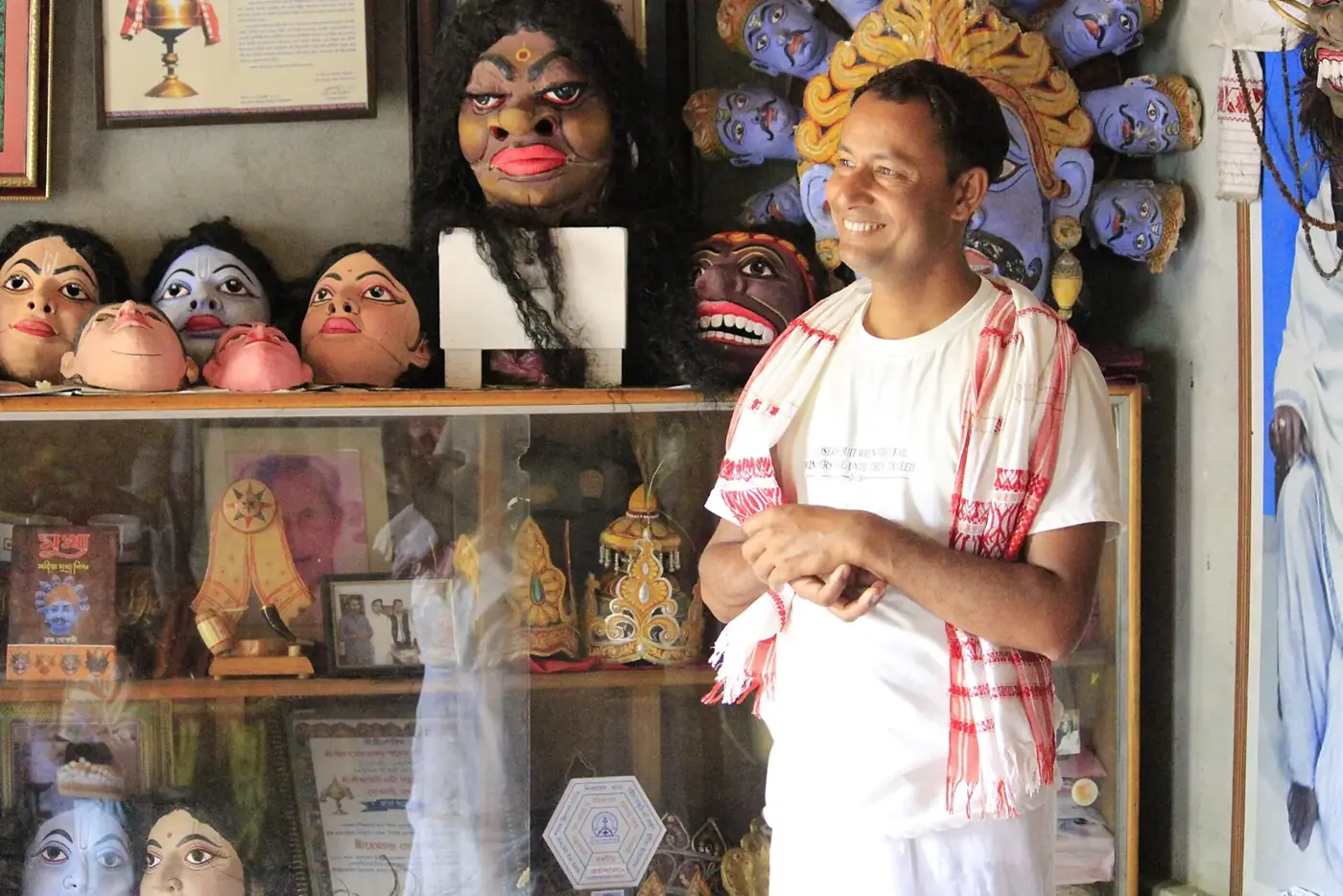
Walk into a mask workshop on Majuli and the first thing you meet is a face. Then another, and another: a ten-headed Ravana, a fierce Narasimha, Garuda with his beak, a gentle Brahma. Some sit on shelves, some hang from the rafters, and a few are half-finished, bare bamboo still showing through the clay. This is Samaguri Satra, and it has been making faces like these for centuries.
Where the masks come from
In the 15th and 16th centuries, the saint-reformer Srimanta Sankardeva spread Neo-Vaishnavism across Assam through music, dance and drama. His plays, later known as Bhaona, needed gods, demons, birds and beasts on stage, and masks made them come alive. According to his biographers, Sankardeva used masks of Brahma, Garuda and Hara in his very first play, *Chihna Yatra*, traditionally dated to 1468.
The satras, the Vaishnavite monasteries that grew out of his movement, kept the craft going. On Majuli, the river island that became the heart of satra culture, Samaguri Satra (founded in 1663, according to the district administration) became the most famous for it. Skills pass from father to son, or from a teacher at the satra to his students.
How a mask is made
Everything comes from the island. No plaster of Paris, and traditionally no synthetic colour.
- The frame: strips of seasoned bamboo are woven into a pattern of hexagons to make a light, hollow frame in the shape of the face or body.
- The skin: pieces of cloth dipped in potter's clay are laid over the frame and left to dry.
- The features: a paste of clay and cow dung is built up and shaped with a bamboo tool to form the nose, brows, teeth and cheeks.
- The details: hair, beards and moustaches are made from jute fibre. Crowns and ornaments are added, then the surface is smoothed and dried in the sun.
- The colour: masks were traditionally painted with hengul (red) and haital (yellow) from natural minerals, along with vegetable colours. Today, artists often use modern paints because the natural ones are scarce.
A single mask usually takes around 10 to 15 days, longer in damp weather.
The three kinds you'll see
- Mukh mukha: covers just the face. The most common, and the kind most visitors take home.
- Lotokoi (or lutukori) mukha: larger, reaching the chest, with a separate head that gives the actor more freedom to move.
- Bor mukha: a giant mask that covers almost the whole body and is built in parts. Some stand 8 to 10 feet tall, for characters like Ravana, Narasimha and Kumbhakarna.
A living, changing craft
Old masks were stiff, so actors couldn't show expression or speak easily. Hem Chandra Goswami, born on Majuli in 1958 and a Padma Shri awardee in 2023, is known for masks with movable jaws, eyes and lips, and for masks that come apart for easy handling. Majuli masks have been shown in museums abroad, and in March 2024 the craft, along with Majuli manuscript painting, received a Geographical Indication (GI) tag.
The craft still faces hard times. Floods and erosion have pushed many satras off the island, natural materials are harder to find, and fewer young people take it up. Buying a mask directly from the maker really does help.
Visiting Samaguri from Jorhat
- Getting there: take the ferry from Nimati Ghat, about 15 km from Jorhat, to Kamalabari Ghat, then a taxi or auto to Samaguri, typically around 12 km. See how to reach Majuli.
- When: workshops are typically open through the day. Allow an hour or two. October to March is the nicest season, and the weeks around Raas in November are the busiest, as masks are made for the stage. See Raas Mahotsav on Majuli.
- Etiquette: entry is usually free, but a small donation is welcome. Ask before you photograph artisans at work.
- Plan: combine Samaguri with two or three other satras. Our Majuli day trip or overnight guide has a realistic schedule.
Ferry times and opening hours change with the season, so confirm locally before you go.
Where to stay: NOI Homes, central Jorhat
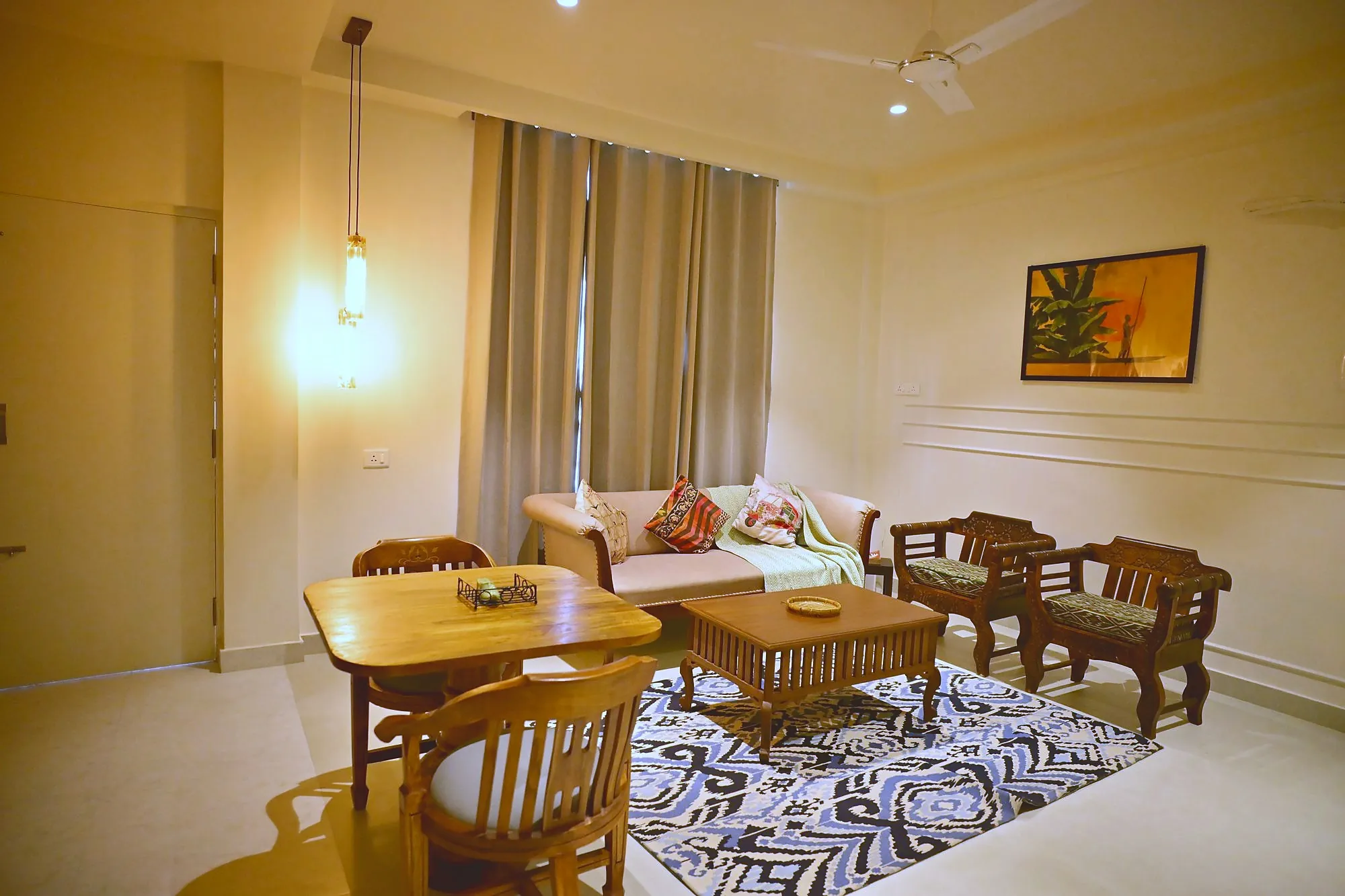
NOI Homes is a boutique homestay on J.B. Road in central Jorhat. There are two 2BHK apartments, each for up to six guests. NOI Homes Elite is always let as the whole apartment, with two bedrooms (Khwaab and Gulmohar). NOI Homes Privé can be booked whole, or as private rooms: Rajwada, the master suite, and Sukoon, the cosy room.
A base in central Jorhat keeps Nimati Ghat a short drive away, so you can catch an early ferry to Samaguri and be back in town by evening.
Every stay includes Wi-Fi, free on-site parking, a fully equipped kitchen and 24×7 on-site help. Breakfast and home-cooked Assamese meals are available on request at an extra charge. See the rooms in the catalogue, or check availability.
Planning dates? Message us with your dates and number of guests. We reply on WhatsApp.
Frequently asked questions
What is Samaguri Satra famous for?
Samaguri Satra on Majuli is famous for its traditional mask-making. The masks are used in Bhaona, the Vaishnavite drama of Assam, and in the Raas festival.
What are Majuli masks made of?
A woven bamboo frame covered with clay-dipped cloth, shaped with a paste of clay and cow dung, with jute fibre for hair, then painted. One mask usually takes 10 to 15 days.
Can I buy a mask at Samaguri?
Yes. Visitors can usually buy masks directly from the artists. Small face masks are the easiest to carry home; pack them carefully, as they are light but fragile.
Is Majuli mask-making GI tagged?
Yes. Majuli mask-making and Majuli manuscript painting received Geographical Indication tags in March 2024.
Timings, fares and seasonal openings in Assam change often. We check our posts regularly, but please confirm locally before you travel. Spotted something out of date? Tell us on WhatsApp.