
Birdwatching in Upper Assam this winter: Majuli wetlands, Kaziranga and the Gibbon Sanctuary
In short
- When: migrant ducks and geese typically start arriving in early November and stay until about March. December to February is the peak.
- Majuli: beels, marshes and sandbars with big flocks of ducks, bar-headed and greylag geese, ruddy shelducks and, in small numbers, common cranes.
- Kaziranga: the eastern Agaratoli range is the birders' pick, with large flocks of bar-headed geese on its wetlands.
- Gibbon Sanctuary: forest birds close to Jorhat, including two hornbill species, on the same early walk as the gibbons.
- Tips: go at first light, carry binoculars, hire a local guide and keep your distance from flocks.

Most people come to Upper Assam for rhinos, tea and satras. But from November, the region quietly becomes one of India's richest winter birding areas. Ducks and geese fly in from Central Asia and beyond to spend the cold months on the Brahmaputra's wetlands, sandbars and grasslands. And all of it is within easy reach of Jorhat.
When to go
Migrants usually begin arriving in early November, and numbers build through December and January. December to February is the best window, with dry weather, calm water and clear mornings. Many birds leave by March. Mornings can be foggy, so plan for a slightly later start on some days. More in Jorhat in winter.
Majuli: a river island full of wetlands
Majuli is flat floodplain dotted with beels (lakes), marshes and small sandbars called chapories. BirdLife lists the island as an Important Bird Area, and its winter waterfowl have been estimated at possibly more than 20,000. What you might see:
- Ducks: northern pintail, northern shoveler, gadwall and garganey, along with flocks of lesser whistling ducks in their hundreds.
- Geese and shelducks: bar-headed geese, greylag geese and ruddy shelducks on the riverbanks and sandbars.
- Big birds: lesser adjutant storks, which nest on the island, a few spot-billed pelicans and, in small numbers, common cranes.
- Waders and small birds: plovers on the sandbars, and warblers in the reeds around wetlands such as Bhereki Beel.
The island also has a long Vaishnavite tradition that discourages hunting. Even so, the birds face real threats. In January 2026, dozens of greylag geese were found poisoned in farmland on Majuli. Go with a local guide, keep to paths and never disturb feeding flocks.
The ferry from Nimati Ghat is part of the experience, with river birds along the way. See how to reach Majuli. Stay overnight if you can, as dawn and dusk are the best times on the wetlands.
Kaziranga's eastern range
Kaziranga is famous for its rhinos, but it's also one of India's great bird parks, with more than 600 species recorded in and around it. In the January 2024 waterbird count, close to 85,000 birds were counted across 115 waterbodies in the Kaziranga Tiger Reserve. Sohola Beel alone held over 13,000 bar-headed geese.
For birds, pick the eastern Agaratoli range, about 20 km east of the main Kohora gate, so a little closer to Jorhat. The jeep route passes wetlands such as Sohola Beel, where you may see geese, black-necked storks, spot-billed ducks and pelicans. Book safaris ahead in peak season. See Jorhat to Kaziranga.
Hoollongapar Gibbon Sanctuary
About 20 km from Jorhat, this evergreen forest is best known for the hoolock gibbon, but more than 200 bird species have been listed here too. Look and listen for the great hornbill and oriental pied hornbill, the red-headed trogon, and raptors such as the crested serpent eagle. Arrive early, around 6:30 to 7 am, when both birds and gibbons are most active. See our Gibbon Sanctuary guide.
A simple three-day birding plan
- Day 1: dawn at the Gibbon Sanctuary, then a slow walk through a tea garden nearby.
- Day 2: an early ferry to Majuli, wetlands in the afternoon, and a night on the island.
- Day 3: a morning jeep safari in Kaziranga's Agaratoli range, then back to Jorhat.
What to carry
- Binoculars, and a zoom lens if you shoot.
- Muted clothing, warm layers for early starts and the ferry, and comfortable shoes.
- A field guide or a bird app, water and a packed breakfast.
Arrival dates, ferry and safari timings change from year to year, so confirm locally before you go.
Where to stay: NOI Homes, central Jorhat
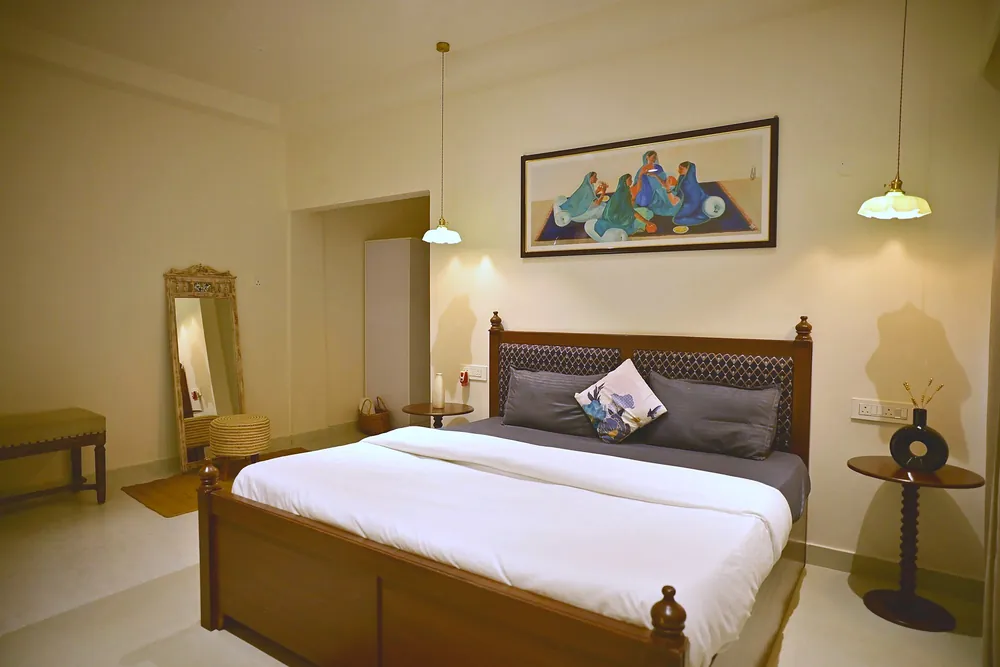
NOI Homes is a boutique homestay on J.B. Road in central Jorhat. There are two 2BHK apartments, each for up to six guests. NOI Homes Elite is always let as the whole apartment, with two bedrooms (Khwaab and Gulmohar). NOI Homes Privé can be booked whole, or as private rooms: Rajwada, the master suite, and Sukoon, the cosy room.
A central Jorhat base keeps dawn starts easy, with the Gibbon Sanctuary close by and Nimati Ghat for Majuli and the road to Kaziranga both within reach.
Every stay includes Wi-Fi, free on-site parking, a fully equipped kitchen and 24×7 on-site help. Breakfast and home-cooked Assamese meals are available on request at an extra charge. See the rooms in the catalogue, or check availability.
Planning dates? Message us with your dates and number of guests. We reply on WhatsApp.
Frequently asked questions
When is the best time for birdwatching in Upper Assam?
December to February is the peak. Migrant ducks and geese typically start arriving in early November, and most leave by around March.
Which birds can I see on Majuli in winter?
Ducks such as northern pintail, shoveler, gadwall and garganey, bar-headed and greylag geese, ruddy shelducks, lesser adjutant storks, and small numbers of pelicans and common cranes.
Which Kaziranga range is best for birds?
The eastern Agaratoli range is the usual choice for birders. Its wetlands, including Sohola Beel, hold large flocks of bar-headed geese and other waterbirds in winter.
Can I see hornbills near Jorhat?
Yes. The great hornbill and the oriental pied hornbill are both recorded at Hoollongapar Gibbon Sanctuary, close to Jorhat. Early mornings give you the best chance.
Timings, fares and seasonal openings in Assam change often. We check our posts regularly, but please confirm locally before you travel. Spotted something out of date? Tell us on WhatsApp.