
Hoollongapar Gibbon Sanctuary: a visitor's guide
Quick answer
- Where: near Mariani, about 19 to 25 km from Jorhat, roughly 30 to 45 minutes by car.
- What: about 21 sq km of evergreen forest, home to the hoolock gibbon, India's only ape, and six other primates.
- When: open all year, from dawn to dusk. Arrive by 6:30 to 7 am; gibbons are most active before about 10 am.
- Best season: October to April. November to February is coolest.
- Entry: a modest entry fee plus a camera fee at the forest office; a forest guide walks with you. Confirm current rates locally.
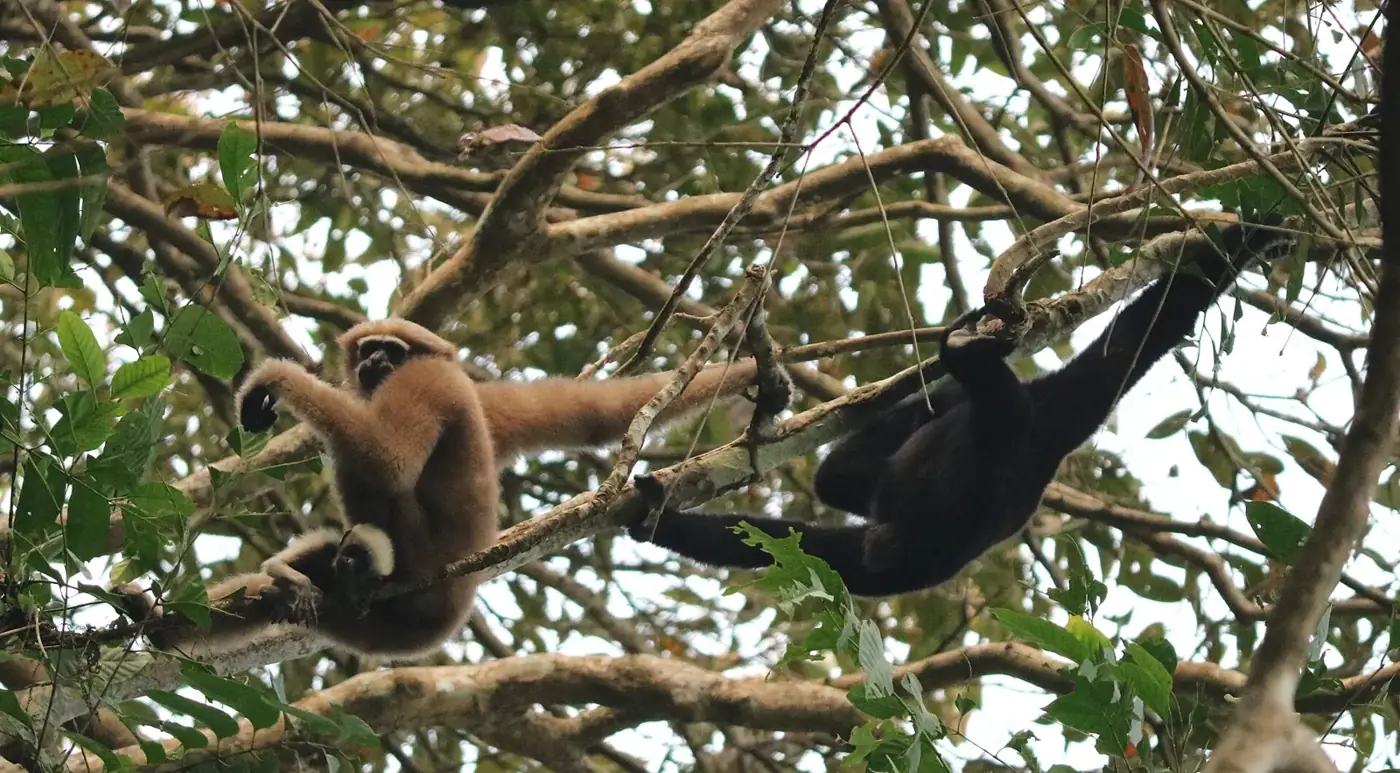
Hoollongapar is one of the most rewarding mornings you can spend near Jorhat. It is a small, dense forest wedged between tea gardens and villages, and it is the only protected area in India named after a primate. On a good morning you hear the gibbons long before you see them: a rising, whooping duet that carries through the trees.
What makes it special
- Hoolock gibbons: the western hoolock gibbon is the only ape found in India. The sanctuary holds one of the larger populations in the country, typically counted at over a hundred animals in more than two dozen family groups. Adult males are black with white brows; females are a pale golden-buff.
- Seven primates: alongside the gibbons live the capped langur, the Bengal slow loris (nocturnal) and four macaques: stump-tailed, pig-tailed, rhesus and Assamese. Few places in India pack so many primates into so small an area.
- The forest itself: the name comes from the tall *hollong* tree, Assam's state tree, which forms much of the upper canopy. Look out for hornbills and other forest birds too.
- A bit of history: the forest was set aside as a reserved forest in the 1880s and became a wildlife sanctuary in 1997. A single railway line has cut through it since the late 1800s, so you may see or hear a train on your walk.
How to reach from Jorhat
- By car: the simplest option. The sanctuary lies off the road towards Mariani, about 5 km from Mariani town, with the forest office at the entrance. Book a car with a driver for the morning, so it waits while you walk.
- By train: Mariani Junction is the nearest station, a few kilometres away, with autos and taxis outside. See our Jorhat railway station guide.
Timings and fees
- The sanctuary is open all year, typically from early morning until dusk, with visits ending by around 5 to 6 pm.
- Gibbons call and move most in the first hours after sunrise. After about 10 am they go quiet and are harder to find.
- Pay the entry fee and camera fee at the forest office near the gate. Rates differ for Indian and foreign visitors and are revised from time to time, so check on arrival.
- Walks are on foot with a forest guide, sometimes with an armed forest guard as well. Vehicles don't go inside.
- Seeing the slow loris after dark needs special permission from the forest department.
Best time to visit
- November to February: cool, dry and comfortable, though early mornings inside the forest can be foggy and chilly. Carry a layer.
- March to May: warmer and humid, but still good if you go at dawn.
- June to September: the forest is lush, but trails are muddy and leeches are common. Leech socks help.
Tips for a good visit
- Leave Jorhat by 6 am to reach the gate early. Carry a packed breakfast and water; there are few facilities nearby.
- Wear closed shoes with grip, and muted colours. Bring insect repellent and binoculars.
- Keep your voice low and follow the guide. Never feed or call the animals.
- Carry cash for fees and tips, and expect weak mobile signal inside.
- Pair it with a tea garden visit on the way back; the sanctuary sits among the estates.
Where to stay: NOI Homes, central Jorhat
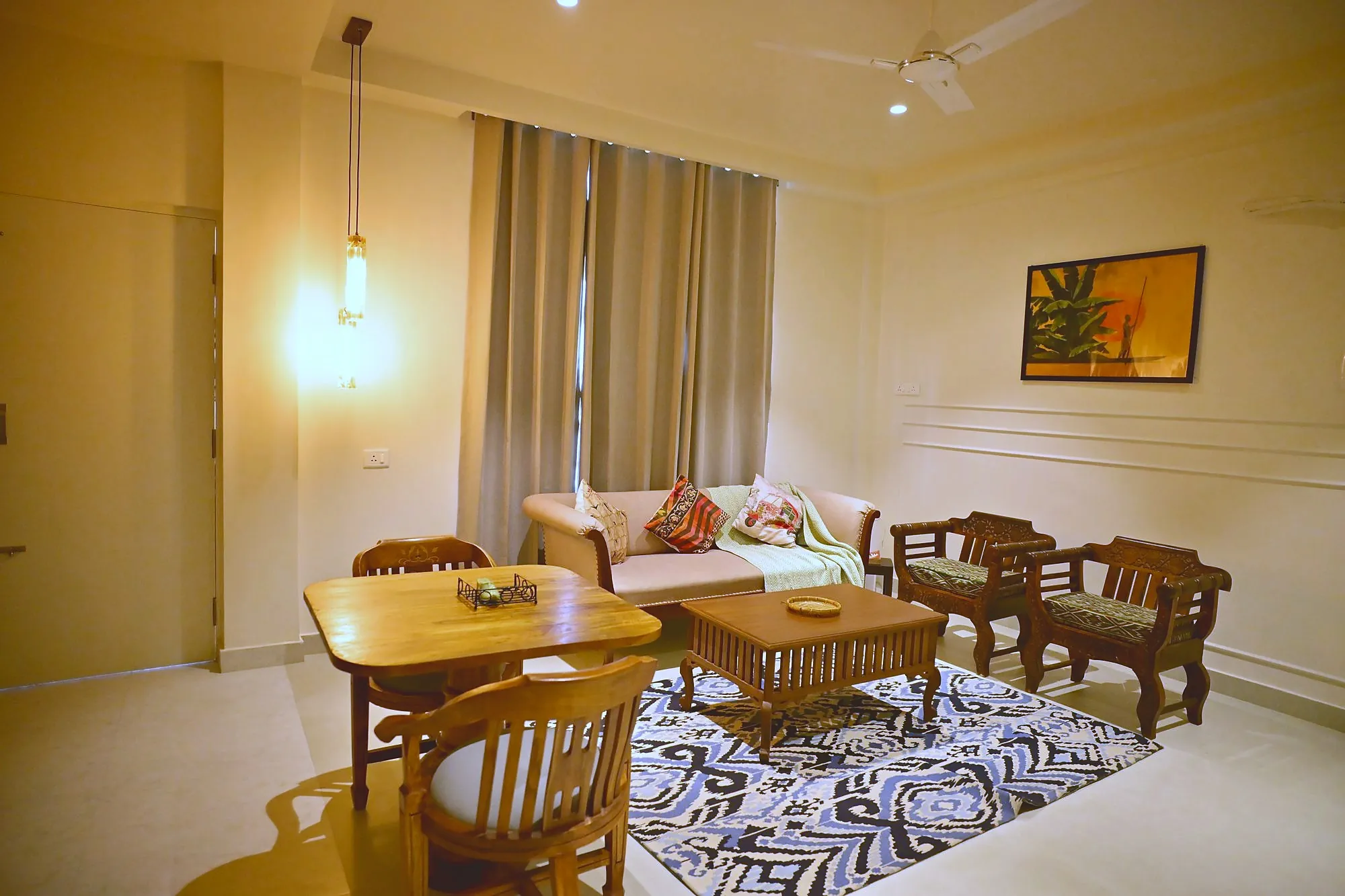
NOI Homes is a boutique homestay on J.B. Road in central Jorhat. There are two 2BHK apartments, each for up to six guests. NOI Homes Elite is always let as the whole apartment, with two bedrooms (Khwaab and Gulmohar). NOI Homes Privé can be booked whole, or as private rooms: Rajwada, the master suite, and Sukoon, the cosy room.
The sanctuary is an easy dawn drive from our base on J.B. Road, so you can be among the gibbons by sunrise and back for a late breakfast.
Every stay includes Wi-Fi, free on-site parking, a fully equipped kitchen and 24×7 on-site help. Breakfast and home-cooked Assamese meals are available on request at an extra charge. See the rooms in the catalogue, or check availability.
Planning dates? Message us with your dates and number of guests. We reply on WhatsApp.
Frequently asked questions
How far is the Gibbon Sanctuary from Jorhat?
About 19 to 25 km depending on where you start in town, roughly 30 to 45 minutes by car. The nearest railway station is Mariani Junction.
What is the best time to see hoolock gibbons?
Early morning, from sunrise to about 10 am, when the gibbons call and move through the canopy. October to April is the most comfortable season.
Is the Hoollongapar Gibbon Sanctuary open all year?
Yes, it is typically open throughout the year from dawn to dusk. Trails are wet and leeches are common in the monsoon months.
Do I need a guide?
Yes. Visits are on foot with a forest guide arranged at the forest office near the entrance. Confirm fees and any guide charges there.
Timings, fares and seasonal openings in Assam change often. We check our posts regularly, but please confirm locally before you travel. Spotted something out of date? Tell us on WhatsApp.